


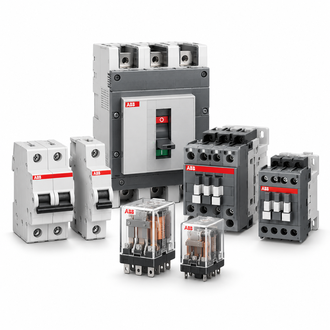
DS201 C16 A30 RCBO: circuit rating, residual-current protection and fit checks
The ABB DS201 C16 A30 combines overcurrent protection with residual-current protection in a compact 1P+N device. The specified code 2CSR255180R1164 identifies the 16 A, C-curve, Type A, 30 mA version. ABB’s product information describes the DS201 range as protection for single-phase end circuits against overload, short circuit and earth leakage. Confirm the exact regional product marking before use.
Key technical data
| Technical item | Verified value / selection note |
|---|---|
| Type designation | DS201 C16 A30 |
| ABB order code | 2CSR255180R1164 |
| Poles | 1P+N |
| Rated current | 16 A |
| Overcurrent curve | C characteristic |
| Residual-current type | Type A |
| Rated residual operating current | 30 mA |
| Rated short-circuit capacity | 6 kA reference; verify applicable voltage and local standards |
The values above are intended to identify the listed version and support an initial technical review. Confirm applicable standards, rating conditions, installed accessories and the current ABB documentation for the serial number or revision before design approval, replacement or commissioning.
Application and engineering focus
Choose the C-curve and 16 A rating only after checking the connected load’s steady current, inrush, cable ampacity and disconnection conditions. The 30 mA residual threshold is an additional-protection value and does not replace protective earthing or the required overcurrent coordination. Type A is intended for residual-current waveforms within its specified scope; electronic loads and power converters may require a different device type under applicable standards.
Configuration, compatibility and related references
The neutral pole and line pole must be connected according to the device diagram. Verify the neutral path, supply direction, busbar compatibility and downstream circuit arrangement. Check rated voltage, short-circuit capacity and required backup protection against the installation’s fault level. A residual-current device is sensitive to leakage summation; separate neutral conductors and correct downstream neutral routing are essential to avoid nuisance trips or unsafe miswiring.
The related designations below are comparison references, not automatic substitutes. Confirm the complete type code, order number, interface, ratings and revision against the approved application before selecting an alternative.
- DS201 C10 A30
- DS201 C16 A10
- DS201 C16 AC30
Installation and commissioning checks
Isolate and test the circuit before replacement. Match the complete order code, pole arrangement, residual-current type and sensitivity; visually similar devices can differ. After installation, check terminal torque, polarity, neutral continuity and protective conductor. Perform functional testing using the approved test procedure, verify trip behavior and label the protected circuit. Follow local electrical codes and qualified-person practices for final commissioning.
During commissioning, verify the nameplate, configuration, wiring and diagnostics before enabling normal operation. Test the relevant signal path or protection response end to end under controlled conditions. Record settings and as-left measurements, and investigate abnormal values at the sensor, load, wiring or system configuration before replacing components.
Ordering, replacement and application information
For a quotation or replacement review, provide the complete designation DS201 C16 A30, 2CSR255180R1164, ABB order code where available, serial or hardware revision, quantity, installation environment, connected equipment, interface requirements and target delivery date. Include a clear rating-label photograph and relevant wiring, loop or panel drawing when possible.
Ask the supplier to confirm the exact configuration, accessories, revision and any approved successor in writing. Do not select solely from a family name or product photograph. For safety, grid-protection, medium-voltage or regulated applications, obtain review by the responsible qualified engineer and follow local codes and the manufacturer’s instructions.
