


A buyer's technical review of Pepperl+Fuchs GLV18-55-G/73/120
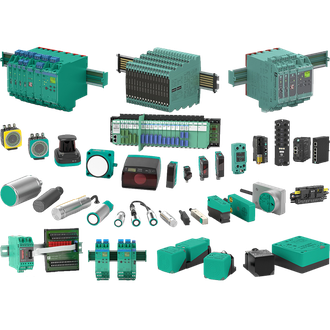
Pepperl+Fuchs GLV18-55-G/73/120 is a retroreflective photoelectric sensor for detecting objects crossing the beam between sensor and reflector. The shared product montage is a category reference image rather than a photo of this exact GLV18-55-G/73/120 variant. The table places the verified identity and useful selection data at the front; the notes below explain where a maintenance or purchasing team should confirm the installed circuit.
Technical parameters and fit
| Technical item | Verified value / selection note |
|---|---|
| Exact model | GLV18-55-G/73/120 |
| Product role | retroreflective photoelectric sensor |
| Optical principle | Retroreflective sensing |
| Operating voltage | 10 to 30 V DC |
| Outputs | 2 complementary PNP switching outputs |
| Switching frequency | 1 kHz |
| Variant check | Confirm the complete designation and current manufacturer documentation before replacement. |
Application path
In this installation, GLV18-55-G/73/120 supports detecting objects crossing the beam between sensor and reflector. Start at the field device or mechanical target, follow the signal through the connection and identify what the host expects. A catalog family resemblance cannot establish output polarity, scaling, hazardous-area approval or interchangeability. The complete GLV18-55-G/73/120 code is the procurement reference, while the as-installed drawing is the acceptance reference.
Installation interface
Before fitting GLV18-55-G/73/120, Check reflector, clear-object behavior, connector and light/dark output assignment. Inspect available cabinet or machine space, cable exit, terminals, environmental limits and nearby equipment. If an old unit has user settings, document them before removal. Confirm the latest nameplate and electrical drawing because GLV18-55-G/73/120 variants can share an enclosure while differing in function.
On-site proof
After GLV18-55-G/73/120 is connected, Cycle a real production object, a clear sample and an empty path while watching both outputs. Record the input condition and the controller's observed response at both ends of the useful operating range. Also check supply, diagnostics and any line-fault indication. A successful power-on indication alone does not prove that GLV18-55-G/73/120 has the correct configuration.
Replacement decision
When purchasing GLV18-55-G/73/120, List the reflector and mounting parts as separate requirements if the original installation uses them. Share the full model, site photos and required certificates with the supplier. Any proposed alternative should be checked against the exact connected equipment and signed off before it replaces GLV18-55-G/73/120; a similar-looking code is a search reference, not a declared equivalent.
Other visually related ordering codes
The following designations resemble the GLV18-55-G/73/120 naming pattern and are collected here to help buyers locate variants. Their functions, electrical ratings, connections and approvals may differ. The exact GLV18-55-G/73/120 technical values above must not be copied onto another suffix without checking its own datasheet.
- GLV18-55-S/73/120
- GLV18-55/73/120
- GLV18-55/73/120 188559
- GLV18-8-450/73/120
- GLV30-8-2500/47/73c
Handover note
Keep the drawing, configured settings, inspection result and purchasing record with GLV18-55-G/73/120. Recheck the current manufacturer datasheet if the duty, mounting, network or approval changes. This closes the GLV18-55-G/73/120 selection and commissioning review without treating related codes as interchangeable.
