


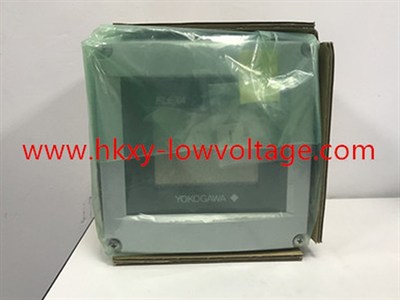
Yokogawa FLXA21 FOUNDATION Fieldbus pH/ORP Analyzer for Digital Plant Networks
The Yokogawa FLXA21-D-P-D-AB-P1-NN-F-N-LA-N-NN/CD4 combines a pH/ORP measurement module with FOUNDATION Fieldbus communication for general-purpose industrial installations. It is intended for plants that want analytical values, device status, and configuration data available on a digital field network rather than through a conventional 4–20 mA/HART loop. The exact CD4 conduit-adapter option and cable-entry arrangement should be confirmed against the current Yokogawa order sheet.
This configuration is useful in digital control architectures where operators and maintenance teams need a consistent view of process pH, ORP, temperature, calibration status, and instrument health. Suitable applications include effluent neutralization, boiler-water treatment, chemical reactors, scrubbers, fermentation support, and utility systems. The analyzer does not replace the need for a correctly selected sensor and representative measurement point.
Planning a fieldbus analytical device
FOUNDATION Fieldbus devices share segment power and communication, so selection should begin with the segment design. Confirm the host system, power conditioner, terminators, spur length, trunk length, device current, cable type, shielding, grounding, and hazardous-area requirements. The FLXA21 F output code should be matched with the approved fieldbus documentation and device description used by the control system.
Before ordering a replacement, record the device tag, node address, transducer and function-block settings, alarms, units, scaling, and control strategy. A new analyzer may have the correct physical suffix but still require host files or engineering changes. Plan the cutover so the loop cannot drive an unintended control action while the analytical reading is unavailable or unvalidated.
| Project field | Information to confirm |
|---|---|
| Full model | FLXA21-D-P-D-AB-P1-NN-F-N-LA-N-NN/CD4 |
| Analytical input | P1 pH/ORP channel with no second input |
| Network | F code FOUNDATION Fieldbus communication |
| Approval group | AB general-purpose CE/RCM configuration |
| Cable-entry option | /CD4 conduit-adapter option; verify thread and supplied quantity before purchase |
| Power concept | Two-wire, segment-powered device within the approved fieldbus power budget |
Measurement design still comes first
A sophisticated network cannot compensate for a poor sensor location. Specify the pH range, temperature, pressure, chemical exposure, solids, cleaning cycle, and required response time. Select a glass formulation, reference junction, temperature element, and holder suited to those conditions. For ORP, verify the metal electrode and whether the process chemistry can produce a stable, meaningful potential.
Place the sensor where the liquid is mixed and representative. Reagent injection points often need adequate downstream mixing distance. In open channels, maintain immersion through changing level. In sample systems, control flow and avoid air ingress. The analyzer can track impedance and calibration information for compatible arrangements, but maintenance decisions should combine diagnostics with visual inspection and process knowledge.
Commissioning on the host system
Inspect the enclosure, glands, conduit adapters, terminals, and shielding before applying power. Verify that only the intended segment terminators are installed and that polarity and grounding follow the project standard. Load the correct device support files if required, assign the address, and confirm stable communication before configuring measurement blocks.
Set the temperature element, measurement mode, compensation, calibration standard, display units, damping, and diagnostic limits. Compare the local value with the control-system value and confirm that status quality changes appropriately during sensor faults or maintenance. Test alarm handling and any control logic that uses the measurement. A fieldbus value should not be accepted merely because communication is healthy.
Operational value and maintenance
Digital communication can make device health and calibration records easier to access, helping teams plan sensor cleaning or replacement. It also creates configuration dependencies. Keep a backup of host parameters, record firmware and device-revision information, and control changes through the plant’s management process. If a sensor is replaced with a different temperature element or electrode type, update the analyzer settings and revalidate the measurement.
The photo is reused because all selected workbook rows specify the same FLXA21 source image; it has not been uploaded again. Since the visible packaging does not prove the complete suffix, buyers should verify the nameplate for P1 input, F communication, AB approval, and /CD4 option before accepting delivery.
