


A practical field record for Pepperl+Fuchs BB10-P/25/33/76b/103/115-7m
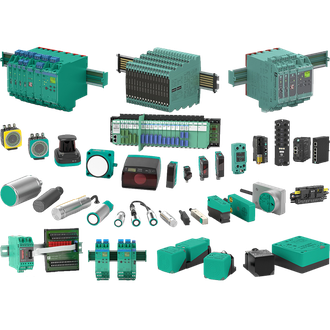
Pepperl+Fuchs BB10-P/25/33/76b/103/115-7m is a thru-beam photoelectric sensor selected to detect objects across a miniature emitter-receiver beam. The full BB10-P/25/33/76b/103/115-7m code is the identification anchor for this page. The shared main montage illustrates the Pepperl+Fuchs category and is not a photograph of this exact option. Before using BB10-P/25/33/76b/103/115-7m as a spare, compare the installed label and project drawing with the current manufacturer documentation.
Technical specification and identity
| Technical item | Verified value / selection note |
|---|---|
| Exact model | BB10-P/25/33/76b/103/115-7m |
| Product role | thru-beam photoelectric sensor |
| Effective range | 0 to 6 m |
| Output | PNP switching |
| Supply | 10 to 30 V DC |
| Connection | 7 m fixed cable |
| Variant check | Confirm the complete designation and current manufacturer documentation before replacement. |
Application decision
Start with the real duty of BB10-P/25/33/76b/103/115-7m: detect objects across a miniature emitter-receiver beam. Then trace what connects to BB10-P/25/33/76b/103/115-7m, including its power source, input or target, outgoing signal and mechanical support. Pair the emitter and receiver, align the beam and confirm PNP input wiring. Record the actual site settings and the parts that are supplied separately. This matters because a near-identical type string can conceal a different output, connection, dimension or approval.
Pre-installation record
For installation of BB10-P/25/33/76b/103/115-7m, document the existing assembly before disturbing it. Photograph the full label, terminals, cable exits, brackets and adjacent modules; mark conductors and save any controller or software configuration. Compare voltage, polarity, loading and environmental limits against the exact BB10-P/25/33/76b/103/115-7m technical record. If BB10-P/25/33/76b/103/115-7m is part of a safety or hazardous-area circuit, the site-approved design and certificates take precedence over an appearance match.
Acceptance sequence
After fitting BB10-P/25/33/76b/103/115-7m, prove its function in the completed system, not merely its power-on indication. Apply a known field condition, read the downstream controller or diagnostic tool, and repeat at both normal and limiting conditions. For BB10-P/25/33/76b/103/115-7m, pair the emitter and receiver, align the beam and confirm pnp input wiring. Capture the observed readings, alarm states and any parameter changes so the maintenance record explains why BB10-P/25/33/76b/103/115-7m was accepted.
Purchasing brief
When asking for BB10-P/25/33/76b/103/115-7m, include the entire type code, quantity, installation location, applicable approval, mating connector or board and required accessories. Ask a supplier to confirm the exact BB10-P/25/33/76b/103/115-7m designation in writing. A proposed equivalent must be checked independently for electrical behavior, mounting, software and certifications. The related codes below are search and identification references; they are not a declaration that they interchange with BB10-P/25/33/76b/103/115-7m.
Related-looking designations
The following strings resemble BB10-P/25/33/76b/103/115-7m in the supplied product family. Their full suffixes may change function, ratings, mechanical fit or approval; consult each exact manufacturer's record before a substitute is used.
- BB10-P/33/59/76B/102/115-7M
Close-out note
For future service of BB10-P/25/33/76b/103/115-7m, retain the final wiring diagram, settings, test result and replacement reference together. Recheck the data for BB10-P/25/33/76b/103/115-7m if the connected controller, process conditions or regulatory setting changes. The table describes the named BB10-P/25/33/76b/103/115-7m where a value is stated; do not extend those values automatically to another listed code.
